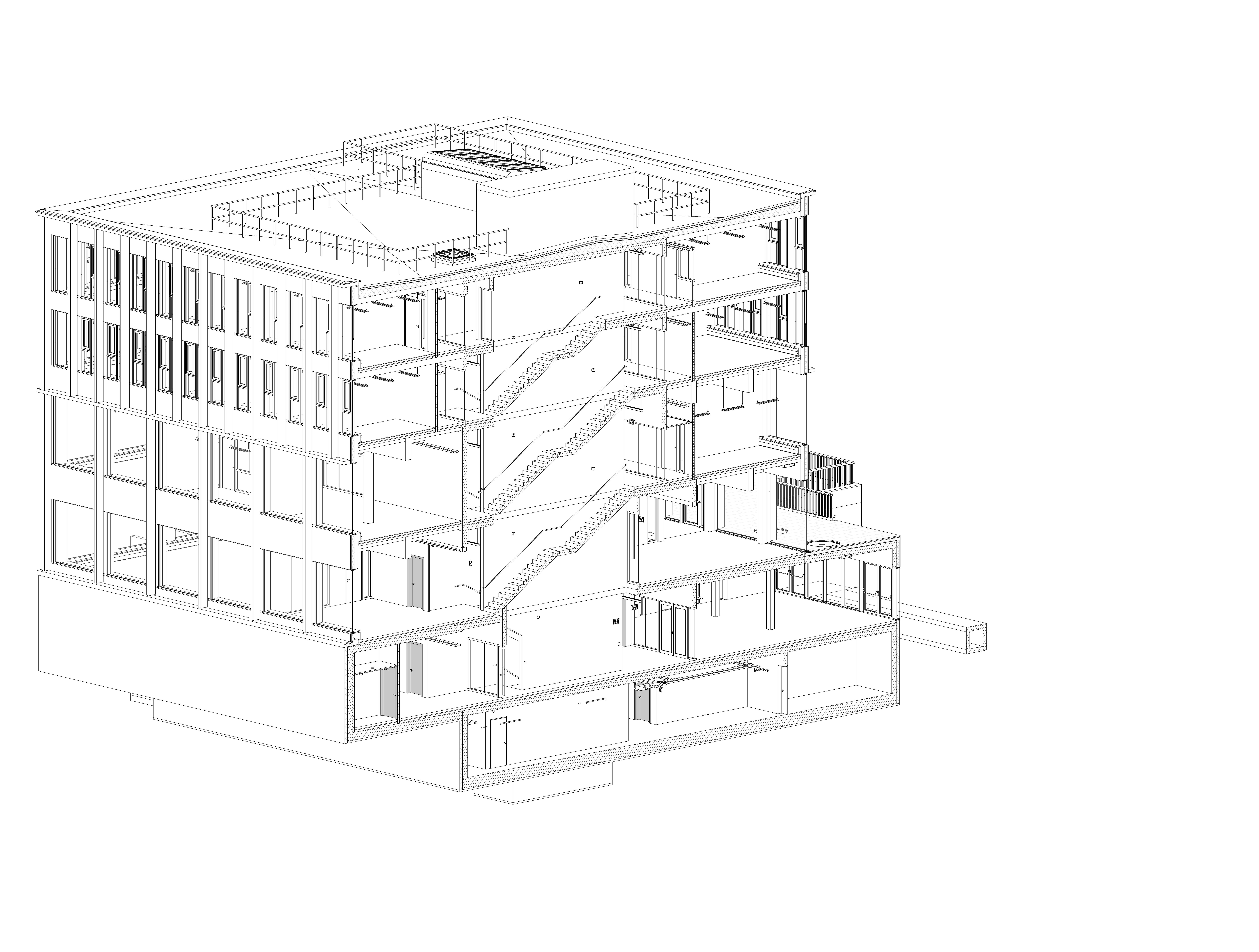
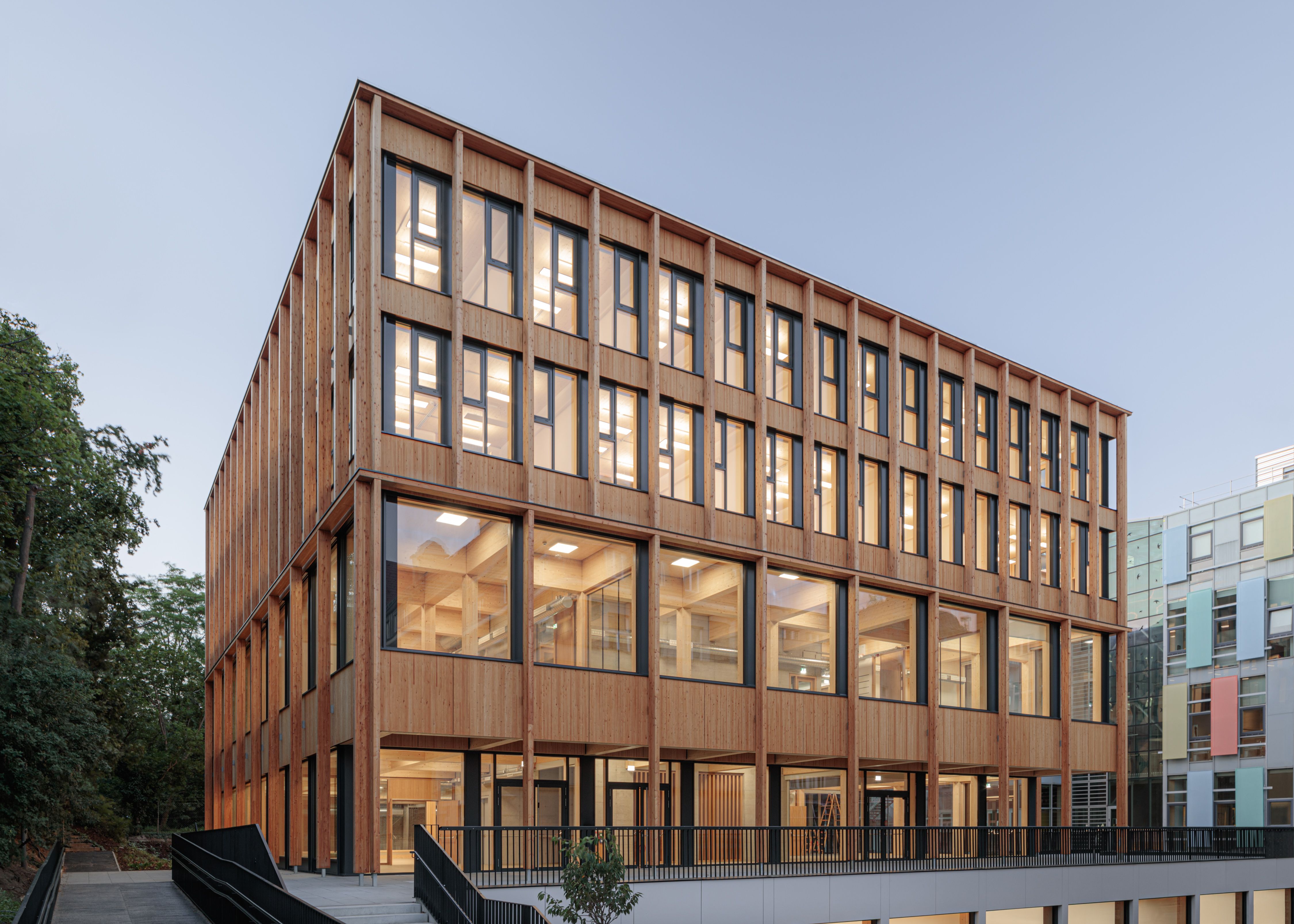
The new library and seminar center is located in the northwest of the BOKU university campus in Vienna, Döbling. The four above-ground timber-built floors rest on a solid base level.
The entrance level houses a generous foyer, a large seminar room, and a cafeteria kiosk. The first floor contains the library and learning zones, while the second and third floors accommodate offices and rooms for two institutes.
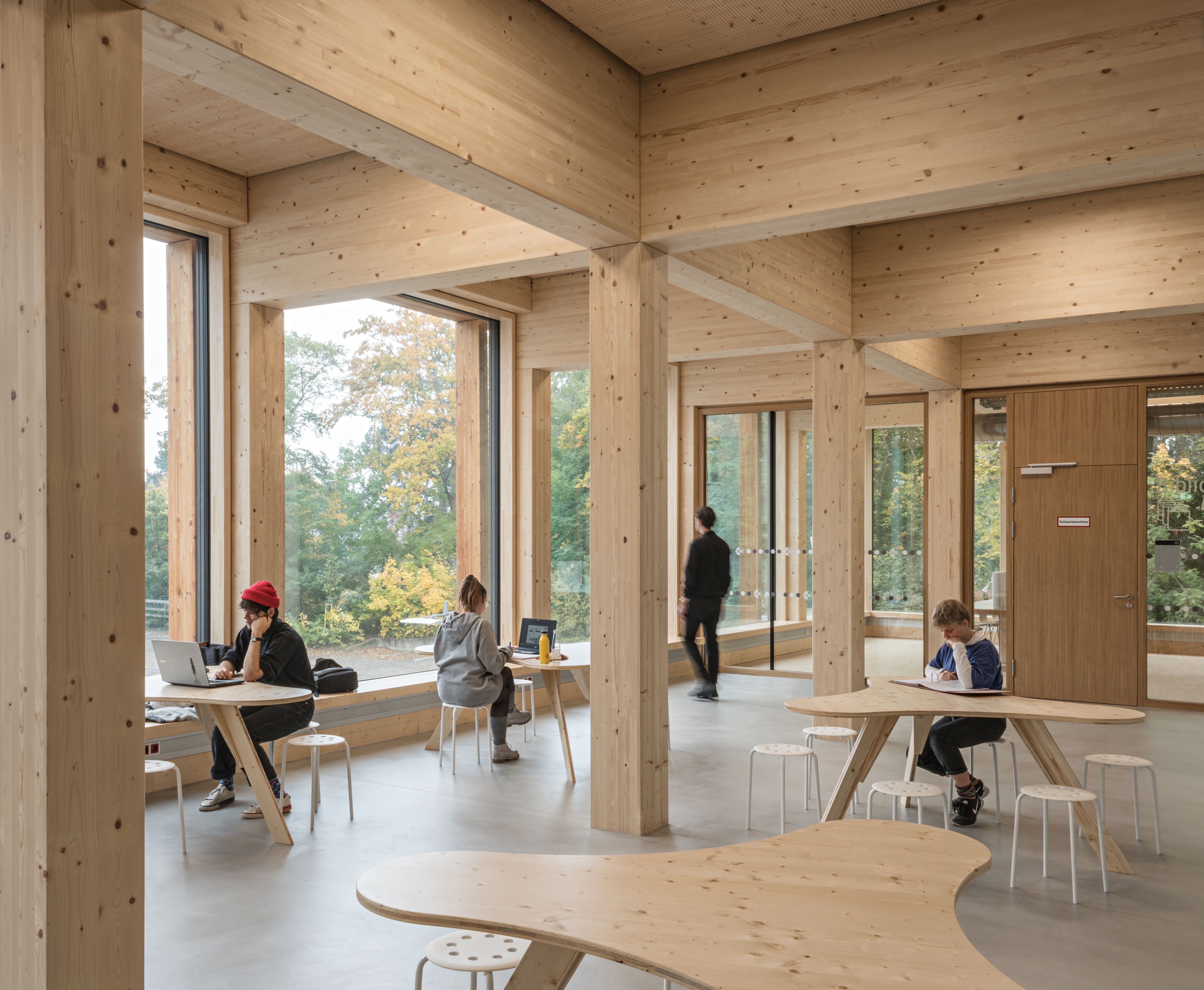
A key design concept was the integration and opening of the building into the surrounding green space, as well as making the clear timber structure legible. The structural grid is expressed both in the façade divisions and, above all, in the interior ceiling grids, giving the building its distinctive character. Well-being and a sense of closeness to nature are enhanced through the use of timber, while the quiet location and views of the surrounding landscape further enrich the quality of the students’ learning environment.

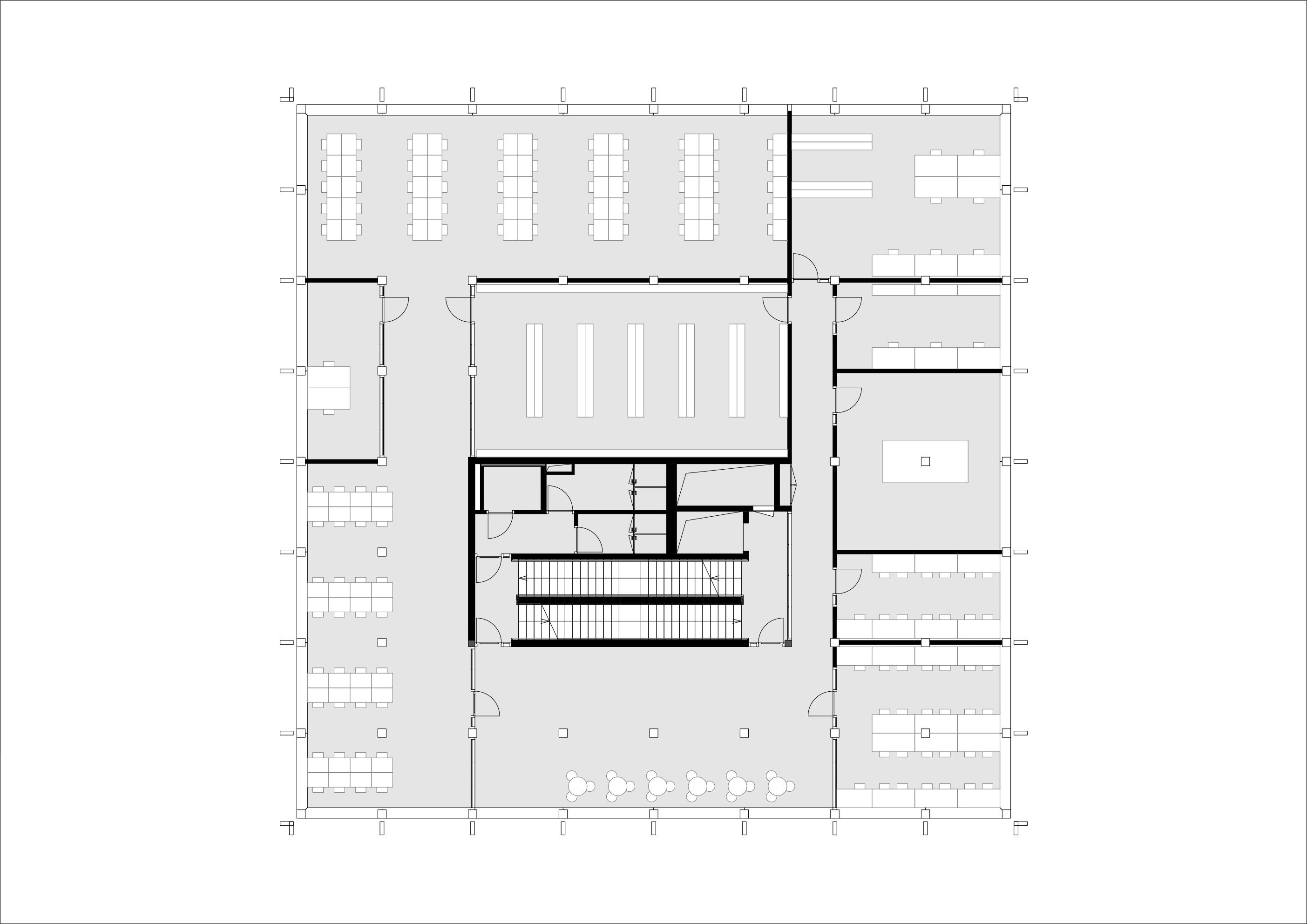
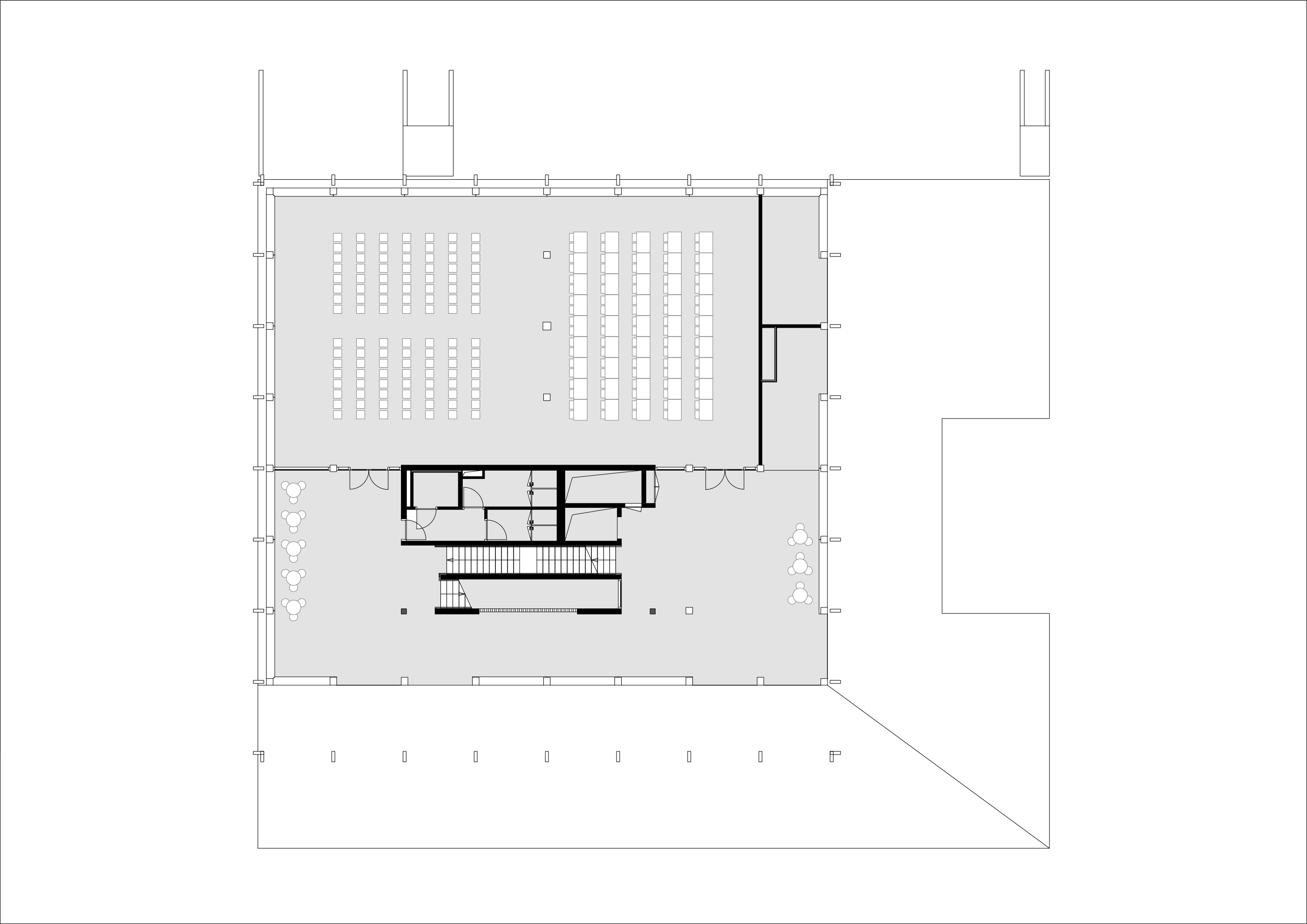
ground floor
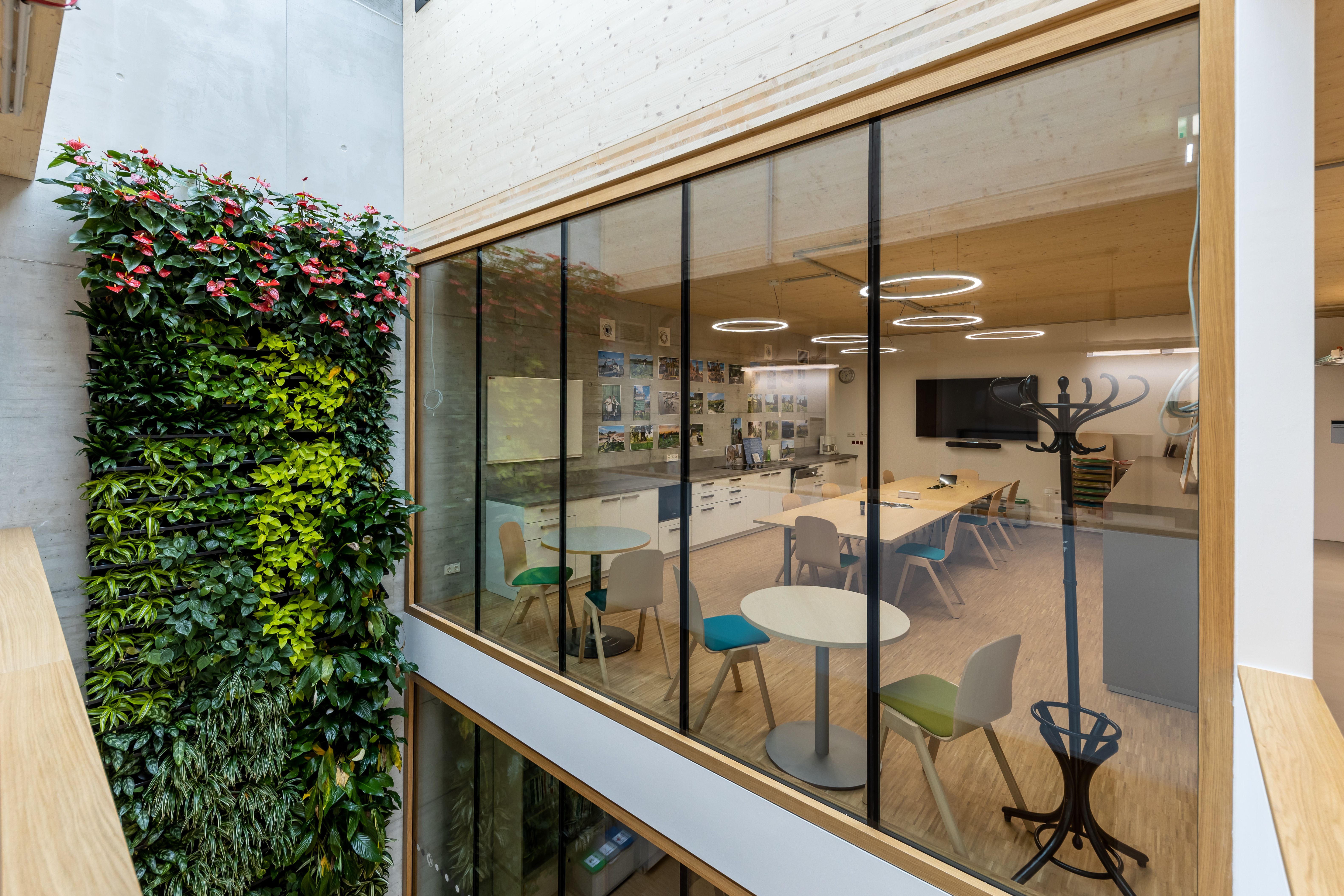
Each floor features a central meeting room as well as a meeting point with a kitchenette. The corner offices accommodate up to eight people and are available to students in the research departments for project work.
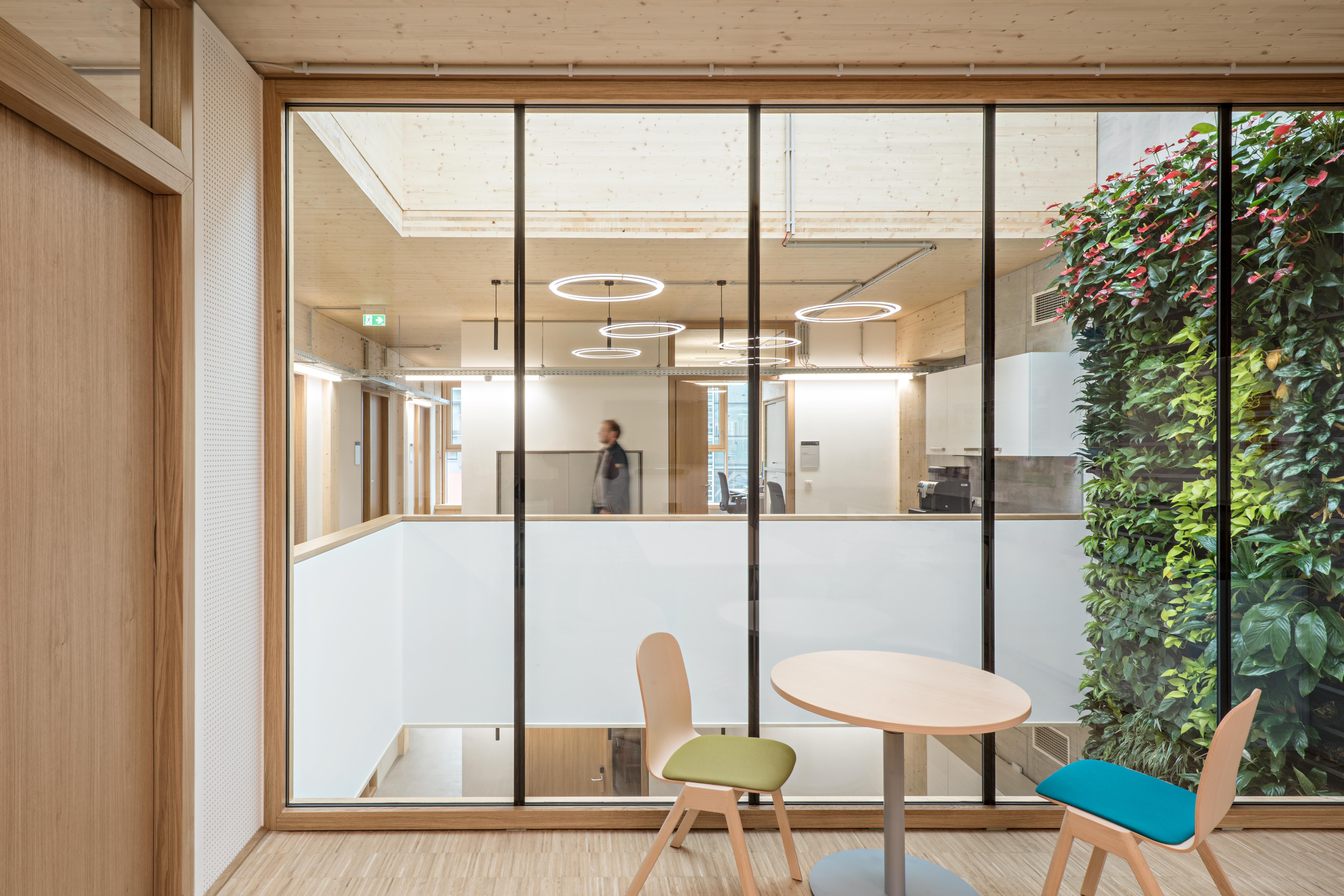
In the institute floors, the ring-shaped circulation ensures short travel distances. Every room receives natural daylight, while circulation areas are illuminated indirectly through corridor-facing glazing and clerestory windows. The communication zones, featuring a double-height atrium and glass roof, also bring daylight into the interior meeting rooms.
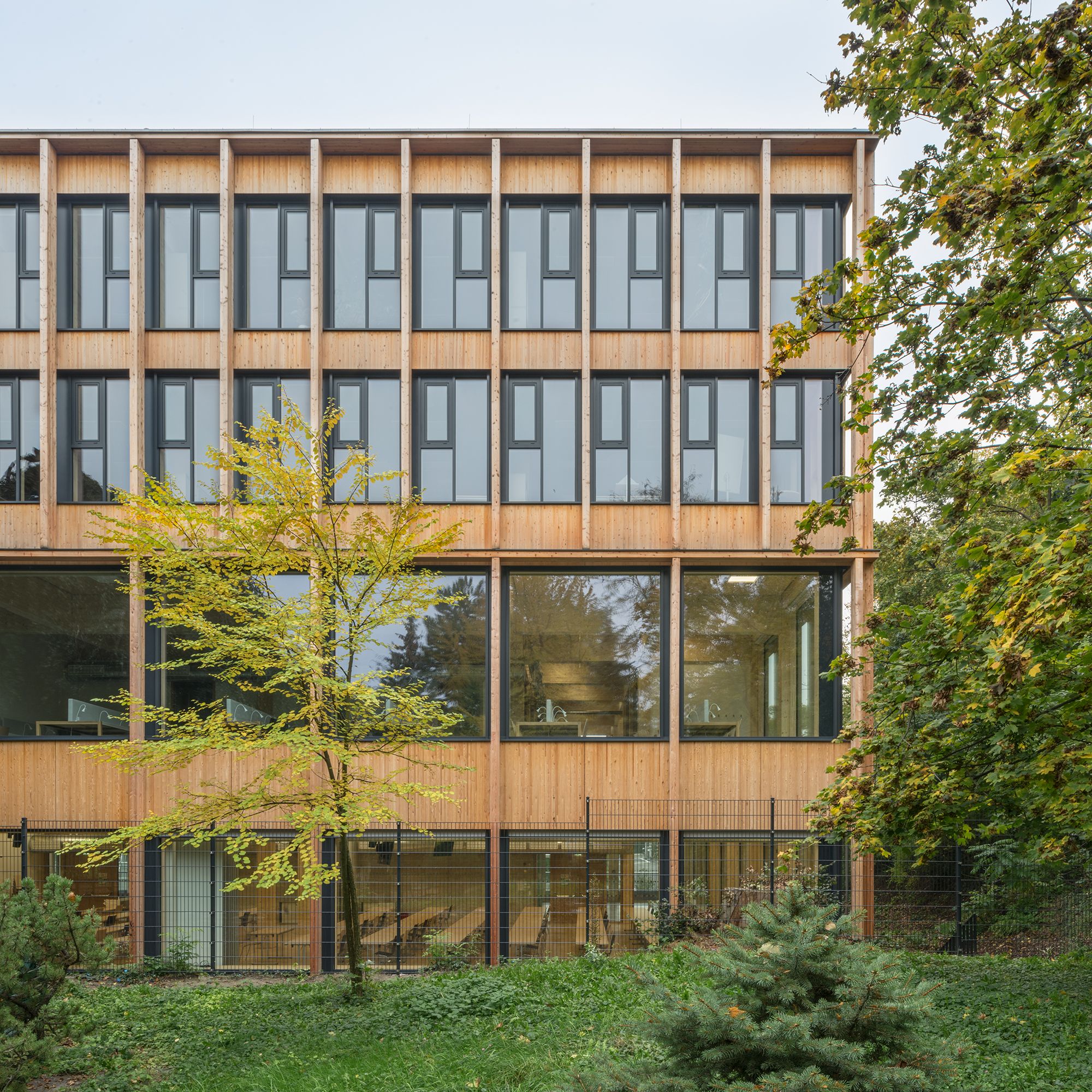
In the four above-ground floors, timber accounts for 78% of the materials used. Approximately 1,000 m³ of wood was employed in the construction, in the form of glulam for columns and beams and cross-laminated timber (CLT) panels for the floors. The BOKU timber building stores around 1,000 tons of CO₂ over the long term, while new trees in managed forests grow to actively capture additional CO₂ from the atmosphere. As a result, the construction of the project, even when considering CO₂-intensive materials such as concrete and the building activities themselves, is ultimately carbon neutral.
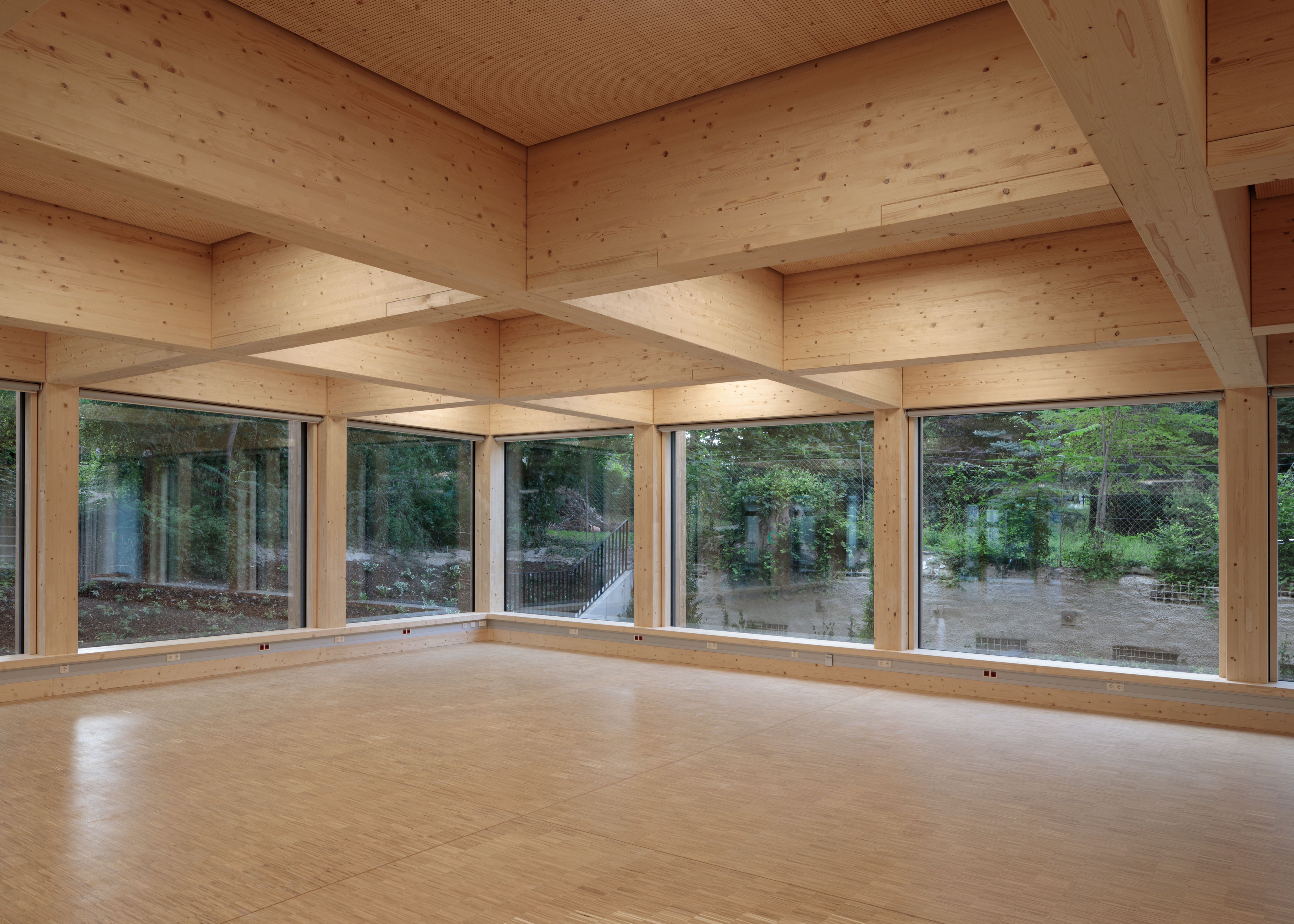
The range of spaces, including seminar rooms of various sizes, user workspaces, and quiet study areas, is complemented by informal zones such as the library lounge, meeting areas, and the furnished terrace. Continuous seating ledges provide additional space, complete with power and LAN connections.
wienwood (c) proHolz Austria
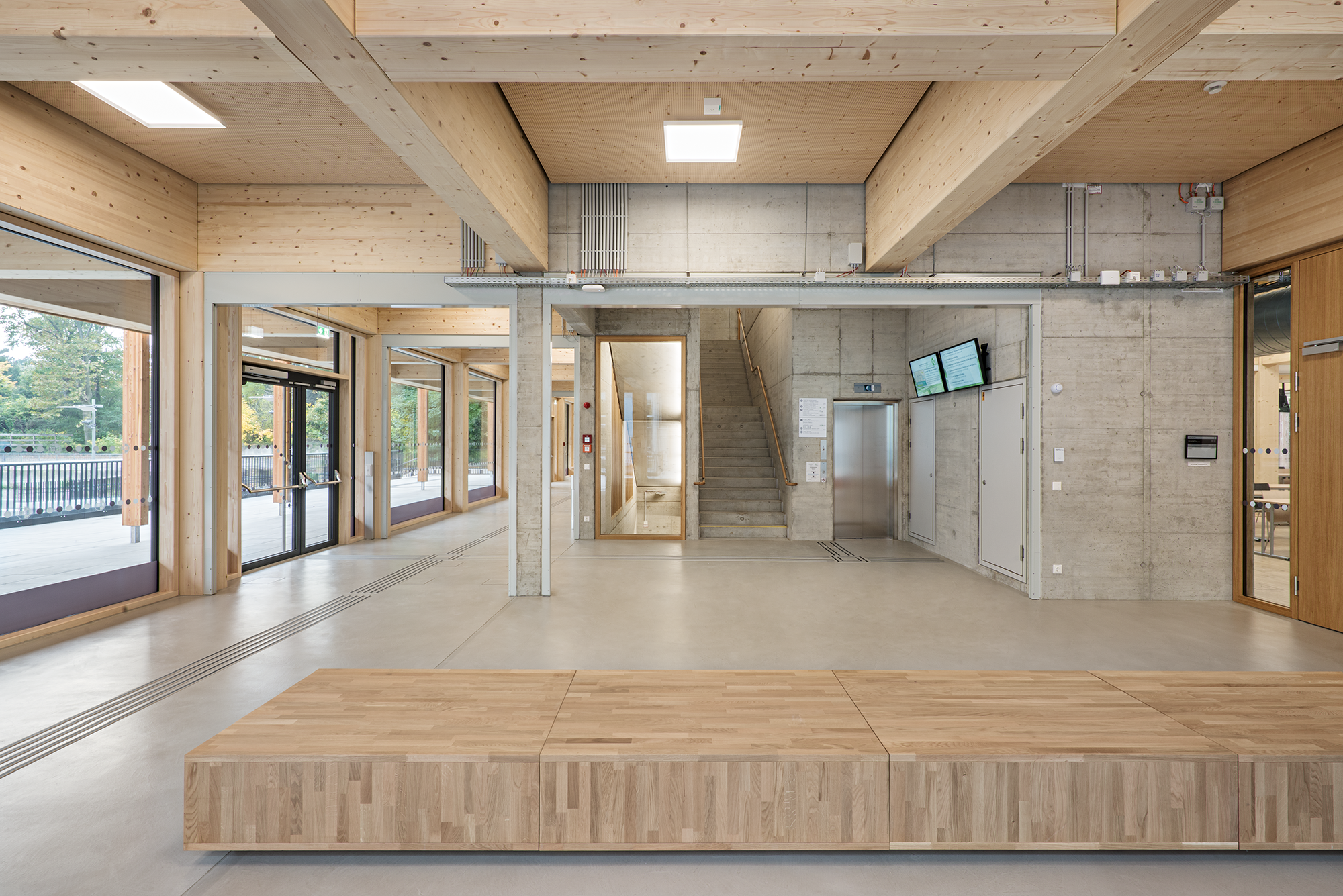
The design concept emphasizes the visibility of structure and technical systems: ventilation ducts and cable trays are installed visibly, and the concrete walls in the stair cores and the podium level are left exposed. Functionally, the building offers students and faculty a high degree of flexibility in its use.
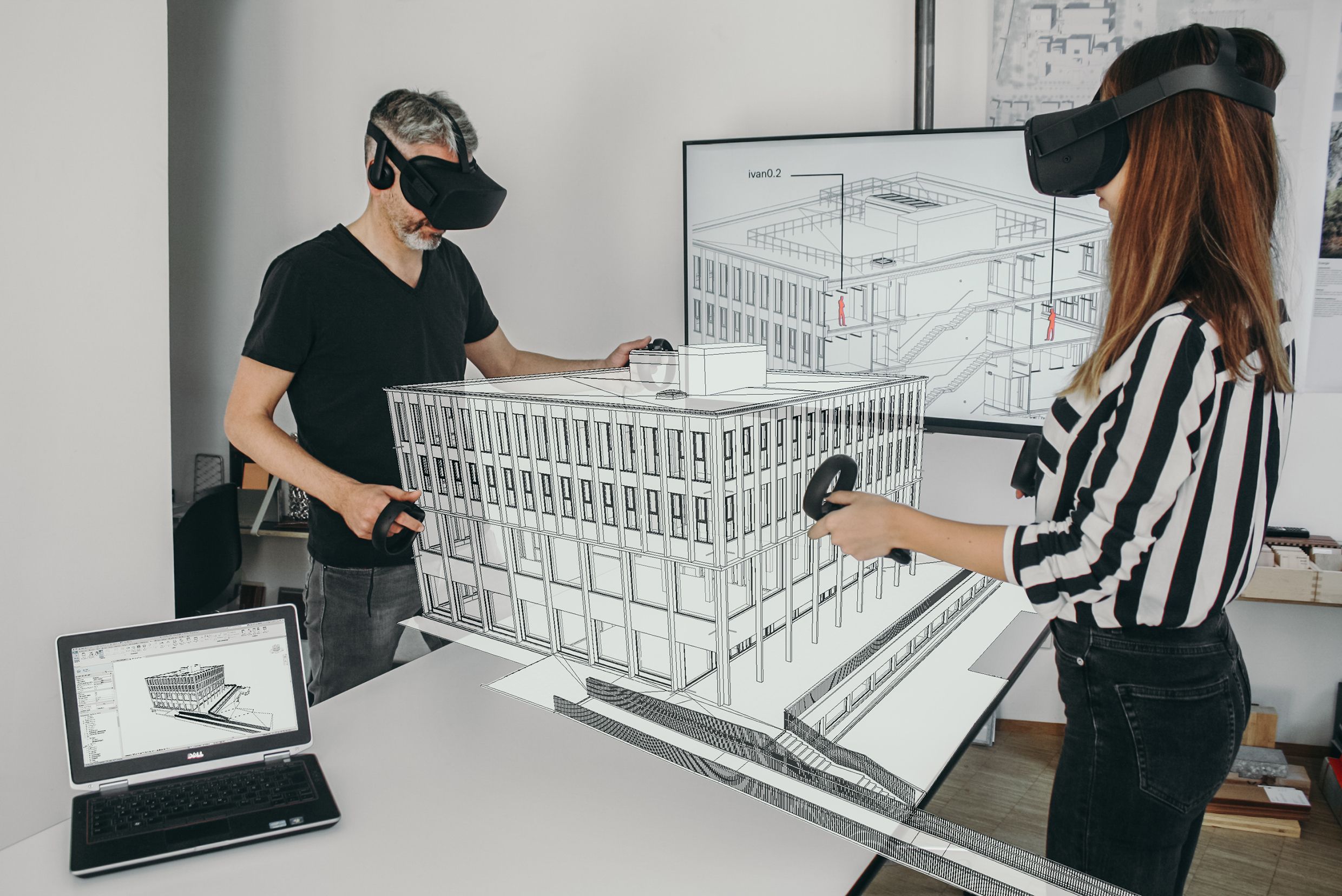
During the design phase, the VR application IVAN was used: 3D data from the CAD software is uploaded to the platform ivanize.com via a software interface and can be immediately viewed and navigated through either Web VR or a VR headset.
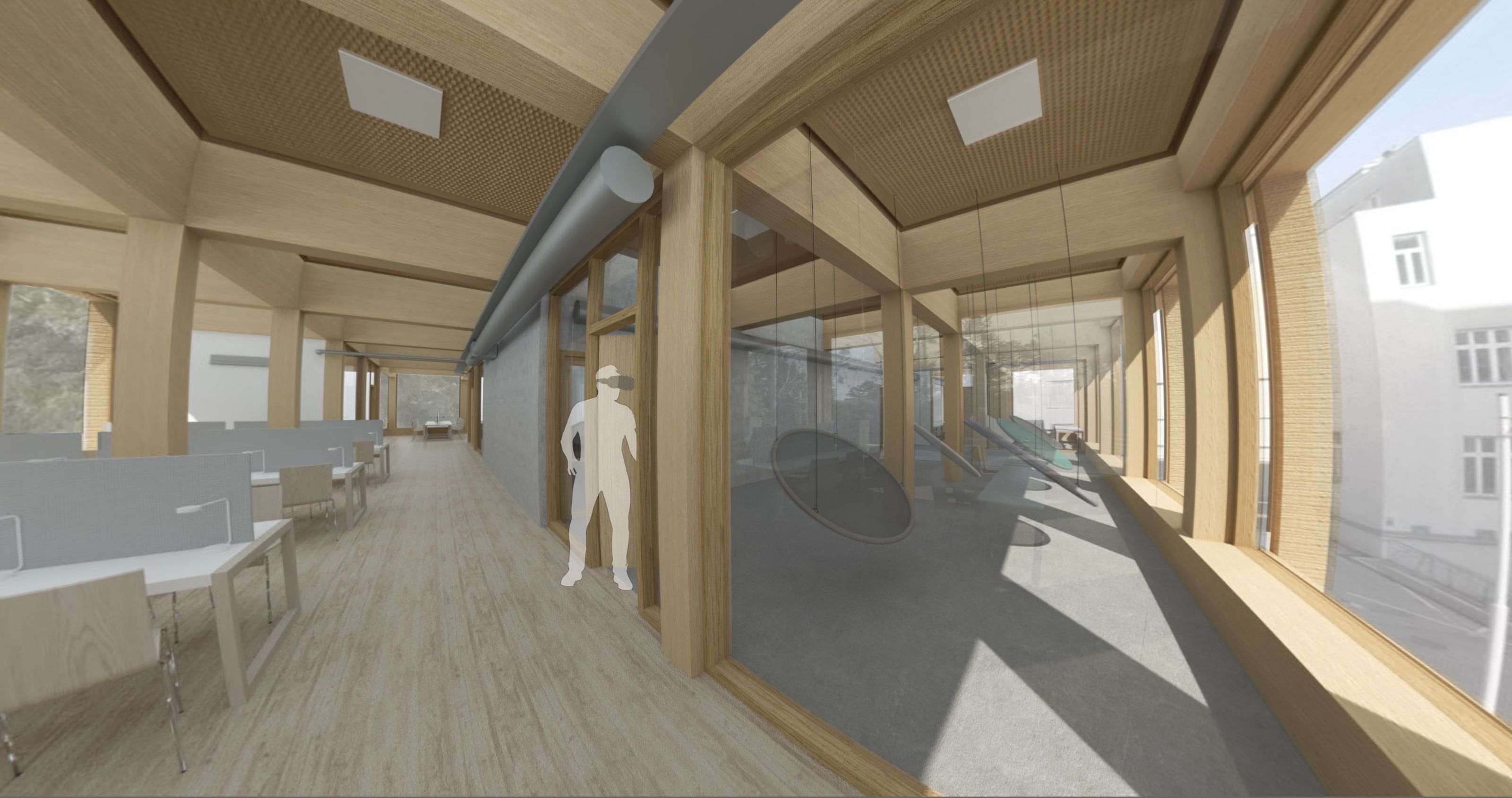
Since the BIM model was already available during the preliminary design phase, user and client coordination was conducted using the 3D model, allowing the engaged clients to be actively involved in the planning process. The VR application IVAN further enhanced user understanding and acceptance of the design.
Ivanize BOKU
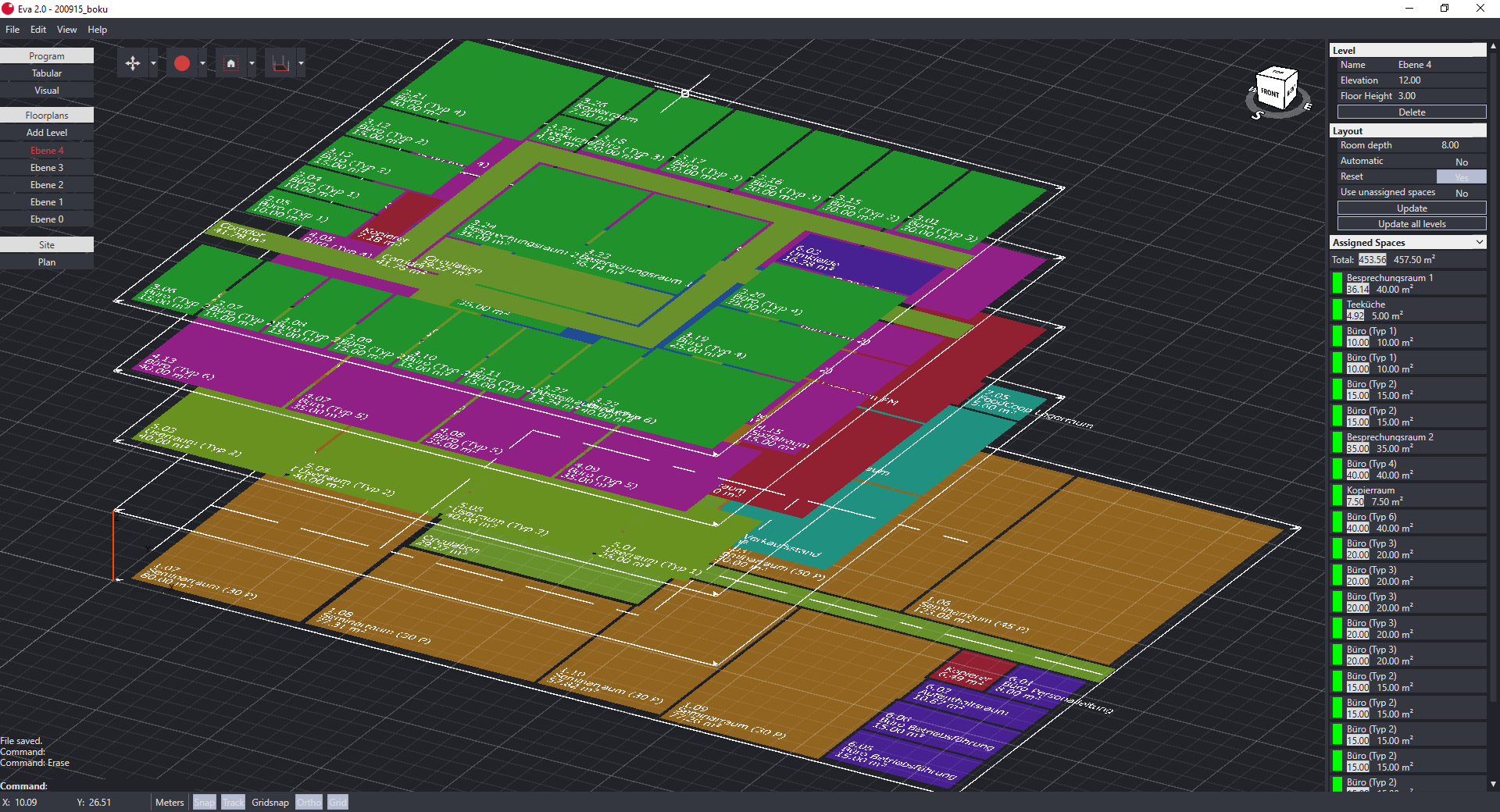
EVA functional program
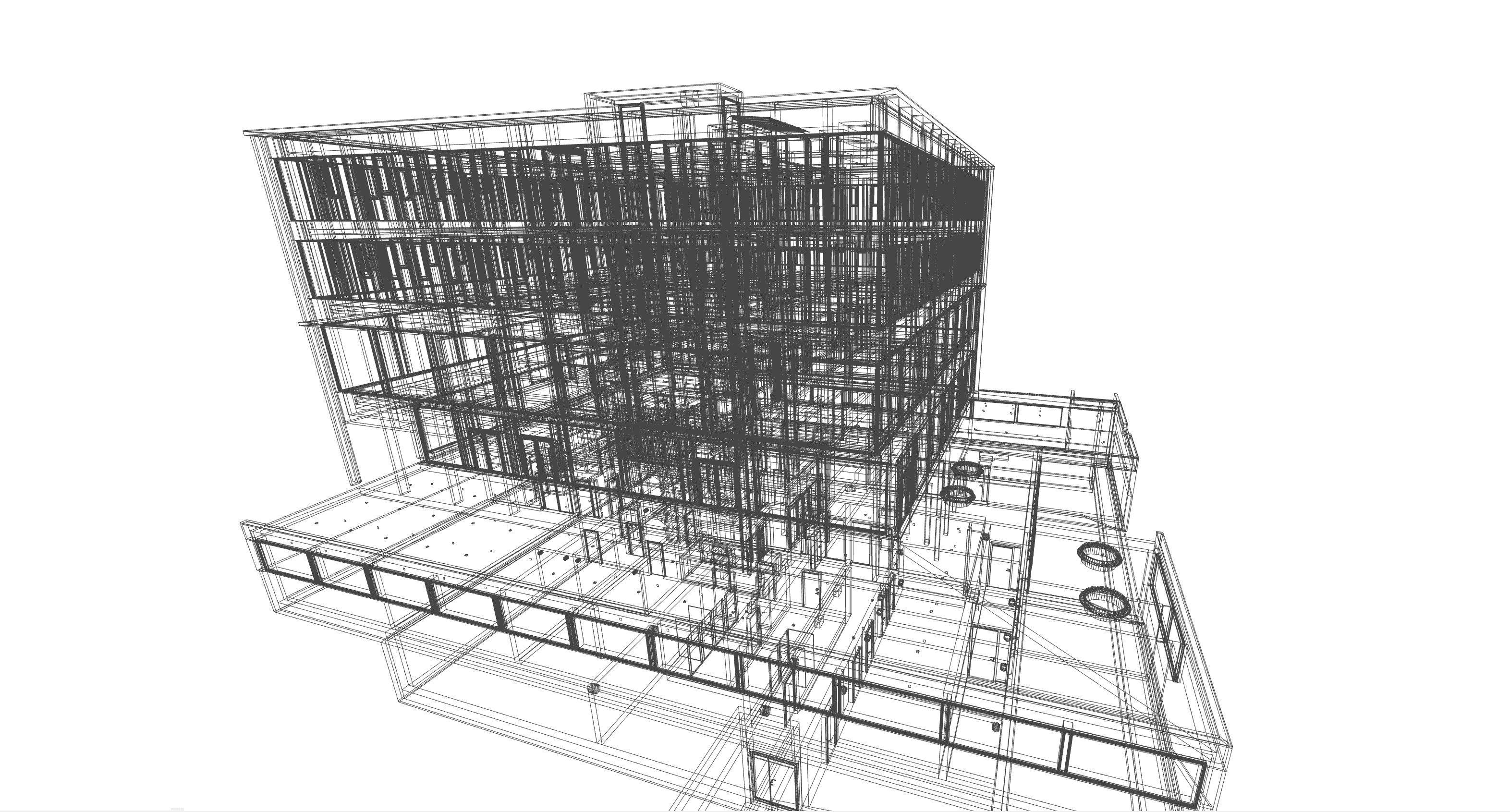
The high degree of prefabrication in timber construction requires precise planning at a very early stage, meaning that the main innovation lies in the digital design process. In recent years, the SWAP Architekten team has developed digital tools, such as the software “EVA-Rapid-Layouting,” which supports the early design phase.